- 9 months ago
How do I choose the right football?
Whether you’re just starting out or have been playing for years, choosing the right football is essential for optimal enjoyment and development. In this comprehensive guide, we explain the different types of footballs, which ball size suits each age, what to look for in materials and quality, and how to best care for your ball. This way, you can always make the right choice.
Different types of footballs
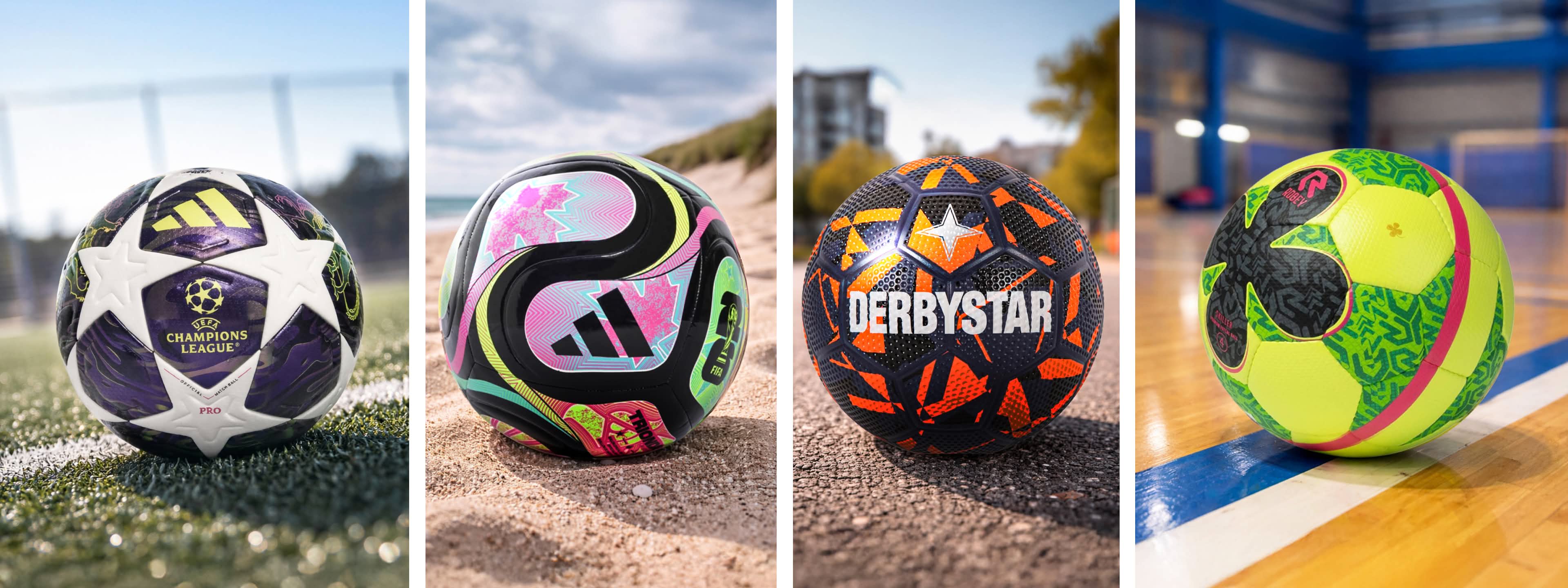
At Voetbalshop, we offer a wide range of footballs, each suitable for a specific situation or surface:
Match balls
Match balls are made from high-quality materials and meet official competition standards. They are perfectly round, well-balanced, and offer optimal grip and bounce. Many match balls carry a FIFA Quality or FIFA Quality Pro certification.
Suitable for: official matches on grass and artificial turf.

Built for top performance and ready for kick-off.
Training balls
Training balls are designed for intensive use. They are slightly heavier and more durable than match balls, making them ideal for daily training.
Suitable for: training on grass or artificial turf.

The perfect ball to improve your game in every training session.
Futsal balls
Futsal balls have reduced bounce, making them easier to control on hard indoor floors. They are smaller and heavier than regular footballs.
Note: never use a futsal ball outdoors.

Fast, technical, and perfect for spectacular indoor play.
Mini balls
Mini balls are smaller and lighter, making them perfect for young children or for practicing technique and ball control.

Small in size, but perfect for extra ball control and fun.
Street balls
Street footballs are extra durable and resistant to rough surfaces such as concrete and asphalt. They last longer than regular balls when used on the street.

On the street, you learn the coolest tricks and moves.
Beach balls
Beach footballs are softer, lighter, and specially designed for sand. This makes them more comfortable and safer to use while playing on the beach.

Football fun on the sand, with sun and action included.
Which ball size is right for which age?
The correct ball size is important for safety and skill development. Here’s an internationally usable table.
| Player age | NL competition | International age category | Ball size | Max weight |
| 4-5 | JO6 | U6 | 3 | 290 g |
| 5-6 | JO7 | U7 | 3 | 290 g |
| 7-8 | JO8 | U8 | 4 | 290 g |
| 8-9 | JO9 | U9 | 4 | 290 g |
| 9-10 | JO10 | U10 | 4 | 290 g |
| 10-11 | JO11 / MO11 | U11 | 5 | 320 g |
| 11-12 | JO12 | U12 | 5 | 320 g |
| 12-13 | JO13 / MO13 | U13 | 5 | 370 g |
| 13-14 | JO14 / MO14 | U14 | 5 | 370 g |
| 14-15 | JO15 / MO15 | U15 | 5 | 370 g |
| 15-16 | JO16 | U16 | 5 | 450 g |
| 16-18 | JO17-JO19 / MO17 | U17-U19 | 5 | 450 g |
| 18+ | MO20 / seniors | Adult | 5 | 450 g |
Tip: Unsure between two sizes? Always choose based on age.
What else to consider when choosing a football?
1. Surface
Always use a ball that is suitable for the playing surface: grass, artificial turf, indoor, street, or sand. This extends the ball’s lifespan and improves the playing experience.
2. Material
The material of the ball determines its feel and durability. Balls made of PU or synthetic materials are durable, water-resistant, and ideal for outdoor use. Leather balls offer a soft touch but are less suitable for wet conditions.
3. Stitched or bonded
The construction of the ball is also important. Hand-stitched balls are very strong and durable, often used for training and street football. Thermally bonded balls are water-resistant, maintain a perfect round shape, and are mainly used for match balls.
4. Weight
The right weight is crucial for young players. A ball that is too heavy can hinder technique and may cause injuries.
5. Ball pressure (PSI / bar)
Most footballs have a recommended pressure between 0.6 and 1.1 bar, which is indicated on the ball itself. Balls that are too soft offer less control and wear out faster, while balls that are too hard can feel painful when striking and reduce ball control. For optimal performance, check the pressure regularly with a ball pump.
6. Water absorption & weather conditions
Modern match balls are often water-resistant, but in rainy conditions it is advisable to use a training ball and avoid prolonged exposure to wet environments. This helps keep the ball in top condition for longer.
7. FIFA Quality certification
The FIFA Quality certification indicates that a ball is suitable for competitive matches, while FIFA Quality Pro represents the highest standard and is used at the top level. For recreational players, this is not required, but it does guarantee quality and reliability.

The perfect ball for every moment and every surface.
How long does a football last?
The lifespan of a football depends greatly on how it is used and the surface it is played on. A match ball typically lasts 1 to 2 seasons with intensive use. Training balls are more robust and can last for several seasons. Street footballs are specially designed for hard surfaces like asphalt and therefore last longer than regular balls. Proper maintenance, such as regularly checking the ball pressure and avoiding prolonged exposure to water or extreme temperatures, can significantly extend the life of any ball.
Common mistakes when choosing a football
When choosing a football, several mistakes are often made that can affect playing enjoyment. For example, a ball that is too large is often chosen for young children, which can make learning technique more difficult and reduce fun. Another common mistake is using a futsal ball outdoors, even though these balls are specifically designed for indoor use and can wear out quickly on hard surfaces. It also happens that a ball is pumped too hard, making shots painful and reducing ball control. Finally, some players use a single ball for all surfaces, whereas a ball designed specifically for grass, artificial turf, street, or sand performs better and lasts longer. By avoiding these mistakes, you can get the most out of your ball and your game.
Accessories for footballs
To get the most out of your football and keep it in top condition, a few accessories are essential:
1. Ball bags
Convenient for carrying and organizing multiple balls. Check out all ball bags here.

Convenient for easily carrying and storing all your balls.
2. Ball pumps
Essential for keeping your ball at the correct pressure for optimal performance. Check out all ball pumps here.

Make sure your ball is always perfectly inflated for every game.
3. Pump needles
Often sold separately to inflate the ball without causing damage.
With this guide, you’ll know exactly which football you need, which ball size fits, and which accessories help you get the most out of it. Check out our full range of match balls, training balls, futsal balls, mini balls, street balls, and beach balls to find the perfect ball!
Which ball size should my child use?
How often should I pump my ball?
Can I use a futsal ball outside?
How do I maintain my football?
Can I use one ball for training and matches?